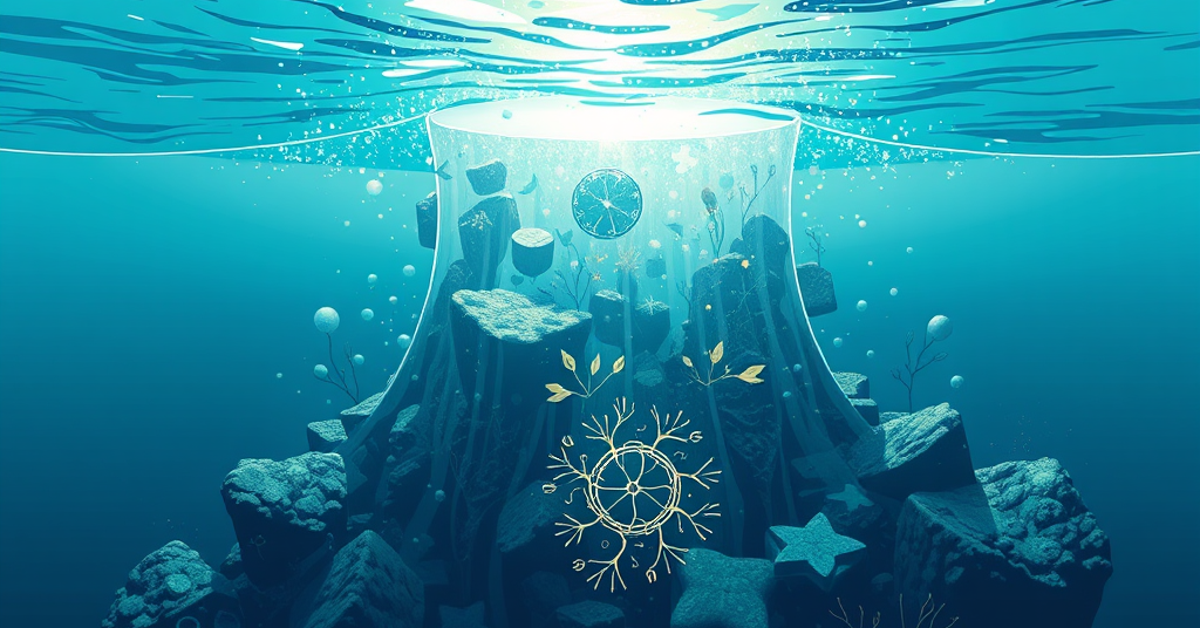
Here’s something nobody quite expected: the sheer weight of the ocean itself might be cooking up food for the creatures living in its depths. According to research published in Science Advances, increasing hydrostatic pressure causes marine particles, the stuff sinking rapidly from the surface toward the seafloor, to release dissolved organic matter along the way. Pressure, in other words, isn’t just a hostile condition deep-sea organisms have to endure. It’s actively reshaping what’s available to eat.
This release process, the study finds, contributes to something oceanographers call the depth attenuation of carbon fluxes: basically, the gradual disappearance of carbon as particles sink from the sunlit surface down into the dark. Less material survives the journey intact. Some of it dissolves back into the water instead, squeezed out by pressure itself.
What’s the takeaway here? The biological carbon pump, the process by which the ocean shuttles carbon from surface to depths, doesn’t behave as a simple, passive sinking system. Pressure gets involved, actively transforming particles as they fall. It’s a mechanical detail with real consequences for how carbon (and food) move through one of the planet’s least visible ecosystems.
{“@context”: “https://schema.org”, “@type”: “ScholarlyArticle”, “headline”: “Deep-Sea Pressure Squeezes a Hidden Meal Out of Sinking Ocean Particles”, “inLanguage”: “en-US”, “citation”: {“@type”: “CreativeWork”, “@id”: “https://doi.org/10.1126/sciadv.aef3182”, “identifier”: “10.1126/sciadv.aef3182”, “name”: “The ocean’s biological carbon pump under pressure”, “isPartOf”: “Science Advances”, “datePublished”: “2026-02-06”}}